01/
Records & planning
Photographs, X-rays and a digital scan. Your case is planned digitally so we can see the projected movement sequence and give you a realistic timeframe before you commit.
02/
Attachments
Small tooth-coloured bumps are bonded to some teeth to give the trays something to grip. They’re removed at the end, and they’re what makes precise movement possible.
03/
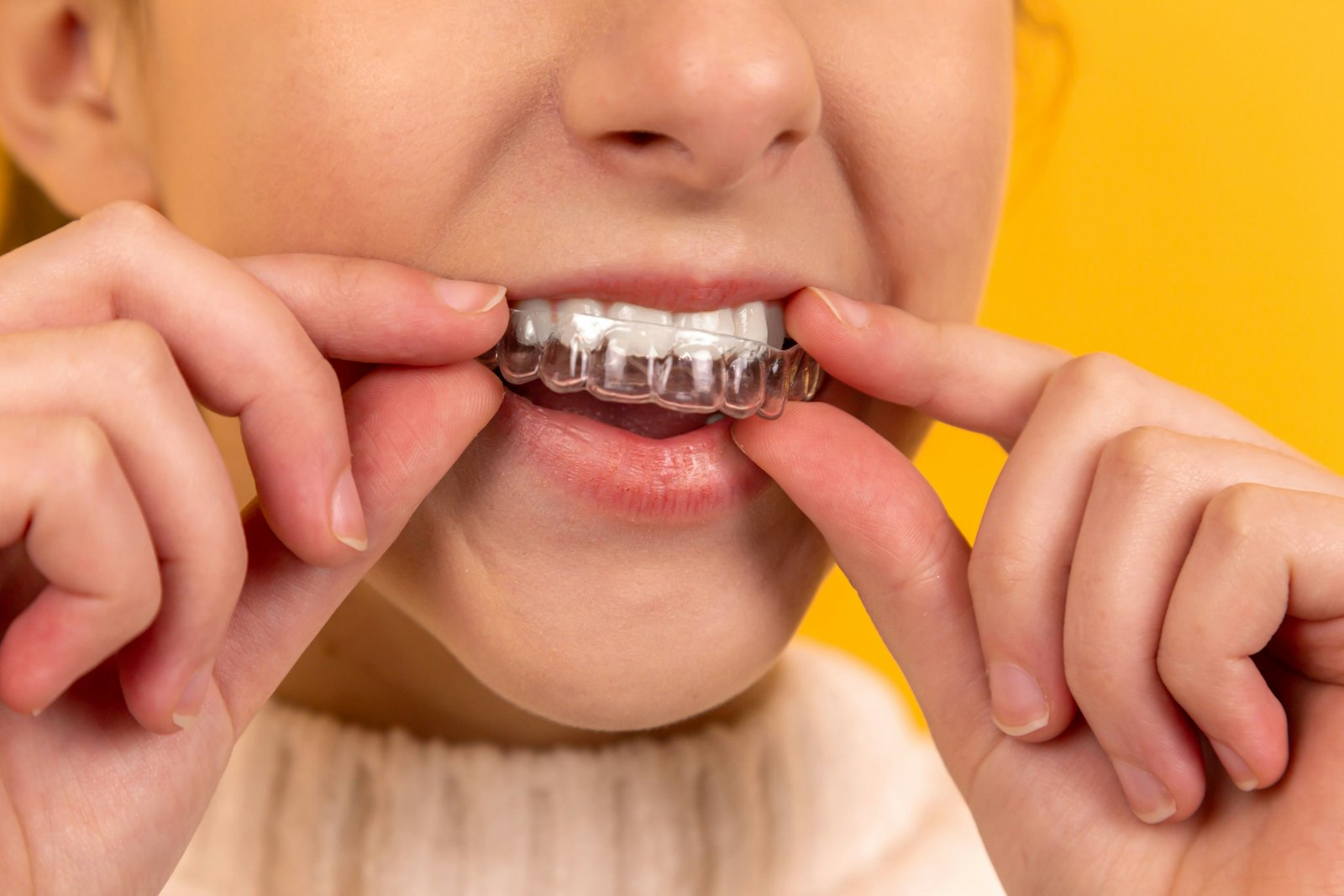
Wearing the trays
Each set is worn 20 to 22 hours daily and changed every one to two weeks. Out for eating, drinking anything but water, and cleaning. Expect pressure for a day or two after each change.
04/
Reviews & retention
Check-ups every six to ten weeks to confirm teeth are tracking to plan. At the end, attachments come off and retainers go in — and stay in the routine indefinitely.
 About UsWho we are and how we care
 Meet the TeamSay hello to the friendly faces who’ll be looking after your smile journey
 Location & Clinic TourFind us on Lawes Street and take a look inside our modern clinic
 Our TechnologyAdvanced tools, gentle treatment and better outcomes for you
 Envision Your SmileSee what’s possible with cosmetic and restorative dental solutions
 New Patients WelcomeWe make getting started easy and stress-free
 Feeling Nervous? Start HereGentle care at your pace, with comfort options